


The era of AI-designed proteins has arrived. But a design alone doesn't make a drug.
For an AI-designed protein to become a viable new medicine, it must be validated through rigorous experimental testing. We need to prove it works in a real biological environment, that it expresses correctly, maintains stability, and binds effectively to its target to produce a therapeutic effect.
Galux's Drug Development Center is the team responsible for providing that 'proof.'
The core strength of Galux lies in its unique, closed-loop system: the protein sequences generated by the Drug Design Center (who we interviewed previously) are experimentally verified for their potential as drugs, and the results are then instantly fed back to the design team. This creates a continuous cycle where AI design and experimental validation circulate within a single, unified structure.
Today, we sit down with Mooyoung, Head of the Drug Development Center, who leads the team based on his extensive experience in the pharma and biotech industries. We dove deep into his journey, the team's pivotal role, and his vision for Galux’s future.
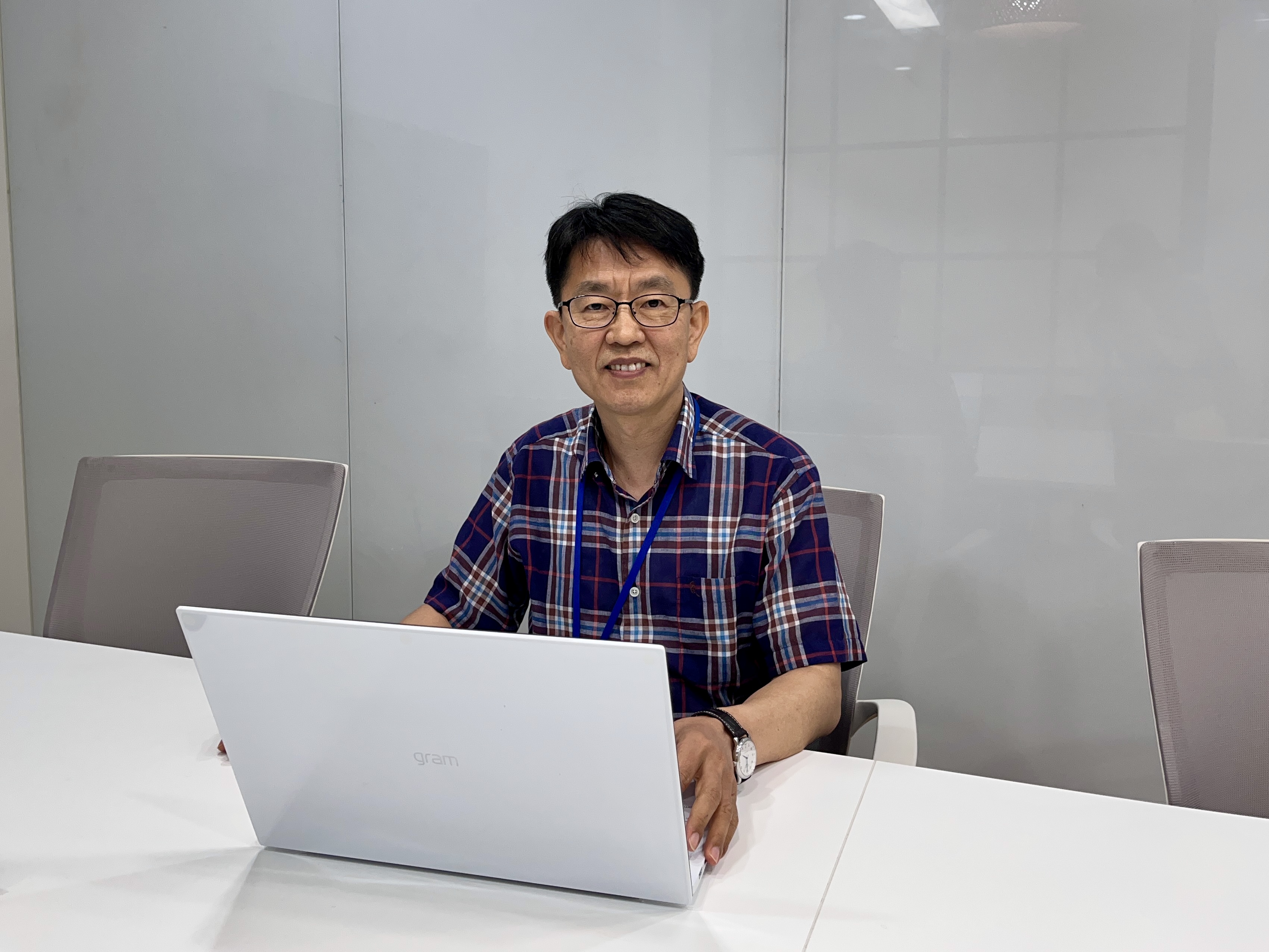
Head of Galux's Drug Development Center, Mooyoung
Career and Joining Galux: "Research That Helps People Through Great Medicine"
Q. Hello! Could you start by introducing your career path and your philosophy on research?
I began my career in 1995 at Yuhan Corporation’s Central Research Institute, focusing on the development and commercialization of diagnostic kits, including those for pregnancy and ovulation. I later developed hepatitis diagnostic kits. Building on the diagnostic antibodies secured during that process, I fully transitioned into therapeutic antibody development starting in 2000.
I accumulated 25 years of experience at Yuhan, covering everything from therapeutic antibody engineering to material manufacturing. Following that, I spent three years at AprilBio, where I successfully advanced two projects to the IND (Investigational New Drug) stage and participated in the company's IPO process.
The most important value in my work is the conviction that 'we must create excellent new drugs that benefit the public.' This philosophy originated from Dr. Il-Han Yu, the founder of Yuhan Corporation, who emphasized creating the best products to help the nation and its people. I think this also resonates with Galux's own conviction of creating beneficial value through technology.
I continue to uphold this spirit today, giving back to society by consistently donating to children's support organizations.
 Q. After such an established career, what motivated you to join Galux?
At Yuhan, I gained depth in research capabilities; at AprilBio, I experienced the speed of development. I wanted to combine those two elements with cutting-edge AI technology to realize a truly novel development paradigm.
Even before joining, I believed AI-driven drug discovery was the future. At the time, however, many companies used AI only as a supplementary tool, not as the core technology. Galux was fascinating because it was building a proprietary AI platform based on extensive research and positioning AI protein design at the center of its operations.
What truly sealed the deal was the internal capability for validation and development. Not just stopping at AI design, but proving that technology through in-house experiments. I wanted to be part of this new wave that leverages high-level AI to translate molecules into actual medicines, which led me to join in 2023.
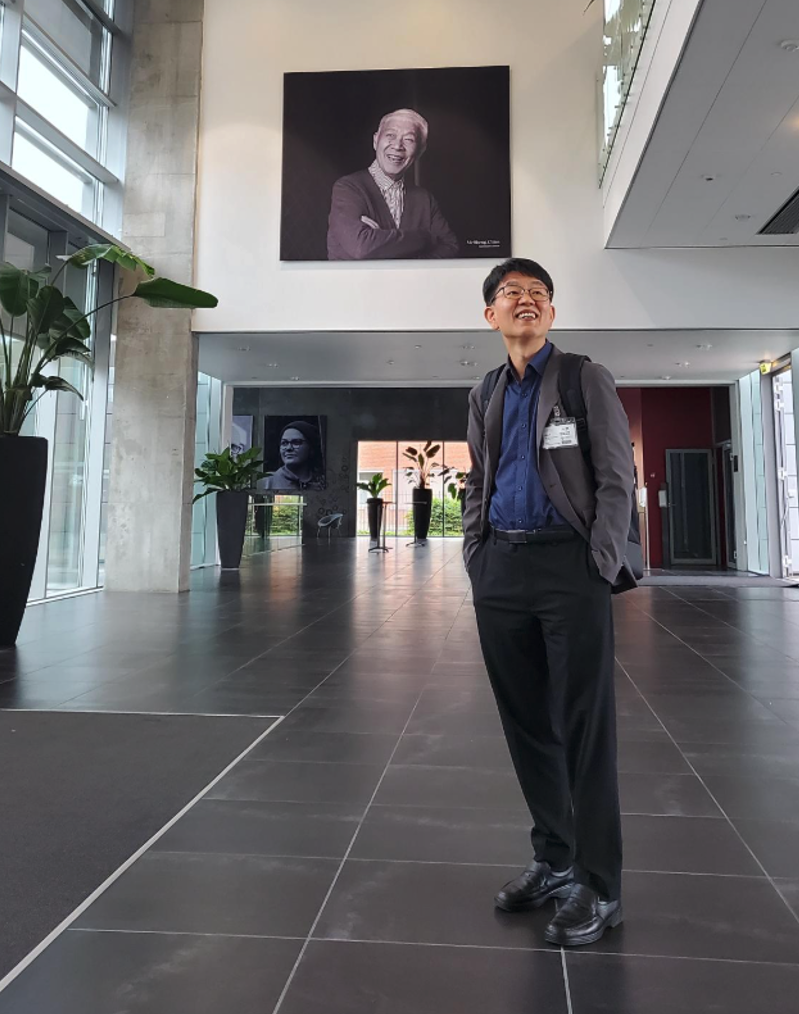
AprilBio in 2022: Visiting headquarter of Lundbeck after the deal closing
The Structure of Drug Development Center: Completing Design Precision with Validation Depth
Q. How is the Drug Development Center structured?
Our team is organized to verify, through biological testing, whether AI-designed proteins have the potential to be developed into actual new drugs.
It is broadly divided into two areas: 'Screening' and 'Material Production and Evaluation,' comprising four specialized teams (Platform Development Teams 1 & 2, Biologics Team, and Drug Evaluation Team).
The Platform Development Teams, mainly responsible for screening, use yeast display systems to select binders/non-binders based on the protein sequences provided by the Drug Design Center. This sequence data is then fed back to refine both the design and the GaluxDesign platform itself.
The Biologics Team and Drug Evaluation Team focus on developing the materials secured through screening and evaluating their potential as new drugs. Specifically, the Biologics Team assesses the physical properties and binding capabilities of the selected 'hit' materials through expression, purification, and analysis.
Building on this, the Drug Evaluation Team conducts in vitro and in vivo studies to verify efficacy and safety, determining the material’s value for clinical advancement.
The center currently houses researchers from diverse fields, including chemistry, molecular biology, pharmacology, and antibody engineering, and more. We leverage each other's expertise, fostering collaboration and generating synergy through a harmonized, cyclical structure. 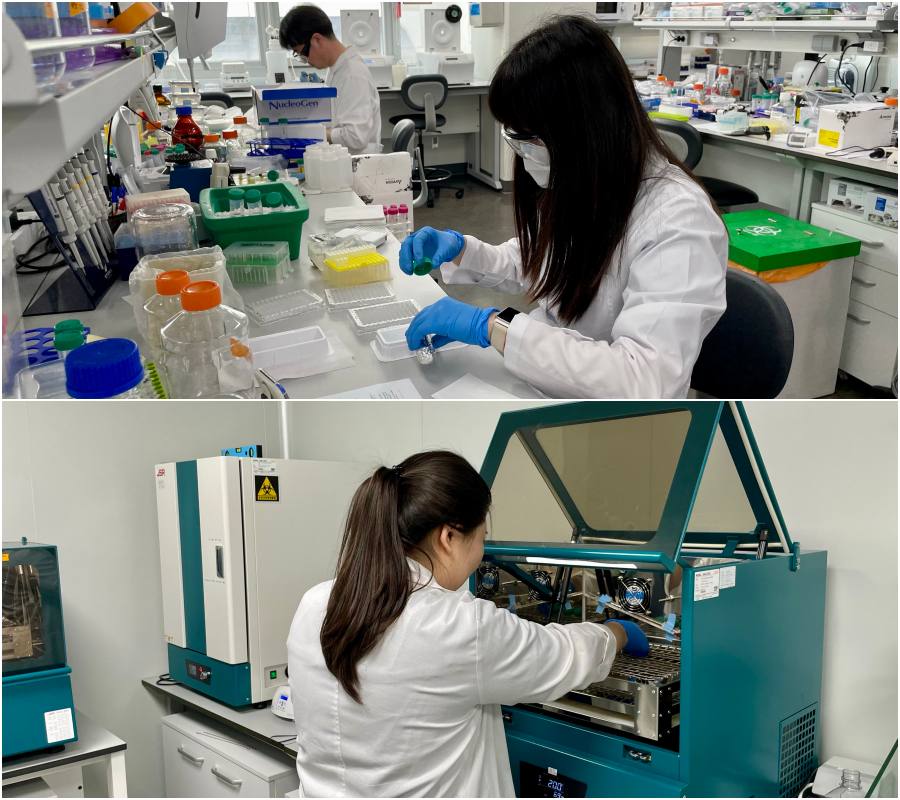
Researchers of Galux's Drug Development Center
Q. What is the significance of having an in-house wet lab, like Galux does?
Most Korean biotech companies possess either a dry lab (digital focus) or a wet lab (experimental focus), but rarely both. While some leading global companies have both systems, it is extremely rare in South Korea to find a company like Galux that integrates AI design and experimental validation under one roof.
Furthermore, our wet lab facility is among one of the finest in terms of scale and enviornment. We directly manage a comprehensive suite of diverse experimental equipment and analytical infrastructure in-house, creating an optimal environment for our experiments.
This integrated structure is crucial because of the sheer volume of information and the speed of feedback required. Proteins involve many unpredictable variables in a biological environment. To validate a design's feasibility, we need to quickly process and analyze massive amounts of data.
Galux's cyclical feedback loop—rapidly translating AI design results into experiments and instantly returning experimental data back to design—is not merely about 'fast feedback.' It represents a structural competitive edge that continuously improves AI design accuracy through real-world experimental data. 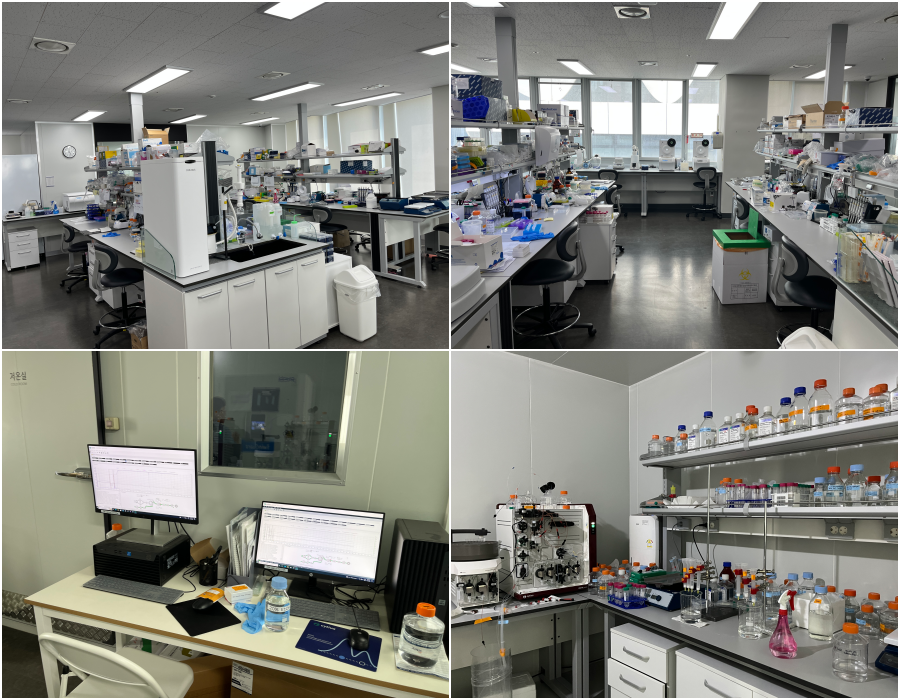
Image of Drug Development Center's laboratory
Synergy in Action: Moving from Possibility to Reality
Q. How does the collaboration with the Drug Design Center work?
When the Drug Design Center delivers an AI-designed antibody sequence for a specific target, we first checks for any sequence anomalies. We then transform the secured gene, verify its expression in yeast, and select binder antibodies that attach to the target antigen.
Throughout the process, we analyze the physical properties of significant antibodies and share real-time feedback and discussions with the Drug Design Center. Once the final selection is complete, information on binders/non-binders at each stage is shared, which is then used to refine and advance the GaluxDesign platform.
Initially, there was a slight gap in understanding due to the difference in speed and environment between in silico and actual lab experiments. However, thanks to Galux's strong culture of continuous consultation and transparent communication, we now understand each other's perspectives, which allows us to operate and generate greater synergy.
Q. What are some key projects that stand out or are currently being advanced?
Our most advanced internal project is an anti-cancer therapeutic utilizing an IL-18 variant. IL-18 is a cytokine that modulates immune responses, making it a prominent target in fields like inflammatory diseases and tumor immunity. Global competitors are researching the same target, but our candidate shows a superior profile in both activity and physical properties, leading us to believe it is ready for global licensing.
A highlight of this project was overcoming the limitation of a human candidate not binding to the mouse receptor. We used AI-based sequence/structure design to derive a surrogate material. Validation using an animal model confirmed its excellent anti-tumor effects.
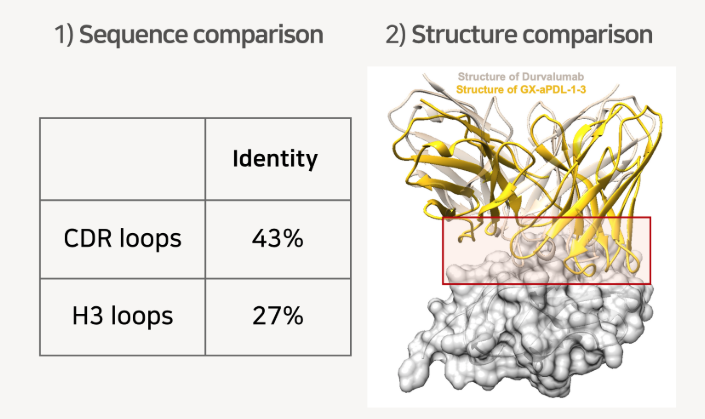
Another representative achievement is our de novo antibody project, which has been featured externally several times. The fact that the our AI-designed antibody showed high binding affinity comparable to that of commercial antibodies was astounding. Recent Cryo-EM structure experiments proved the novelty of both the structure and sequence, and verified that the actual structure precisely matched the AI-designed structure—reaffirming our superior technological capability. [Link to the paper]
Vision: Completing the AI Design Possibility into Medicine
Q. What are the goals and future directions for the Drug Development Center?
In the short term, our goals include shortening the screening and evaluation period for individual antibodies, and advancing at least one molecule into the non-clinical stage.
Long term, we aim to establish proprietary screening technologies that minimize the evaluation period for designed molecules. Ultimately, we seek to complete an AI-driven drug development ecosystem that extends all the way to proving the safety and efficacy of designed molecules in the clinical stage.
Q. What is your personal goal you hope to achieve at Galux?
I want to witness the moment when a candidate molecule, designed and validated by Galux using my experience and the team's capabilities, successfully enters clinical trials or achieves global licensing out.
That wouldn't just be the success of one project; I believe it would establish a new standard for drug discovery and development through AI design and validation.
If that result can go out into the world and change someone’s life, that would be the greatest achievement I could ever hope for as a researcher.
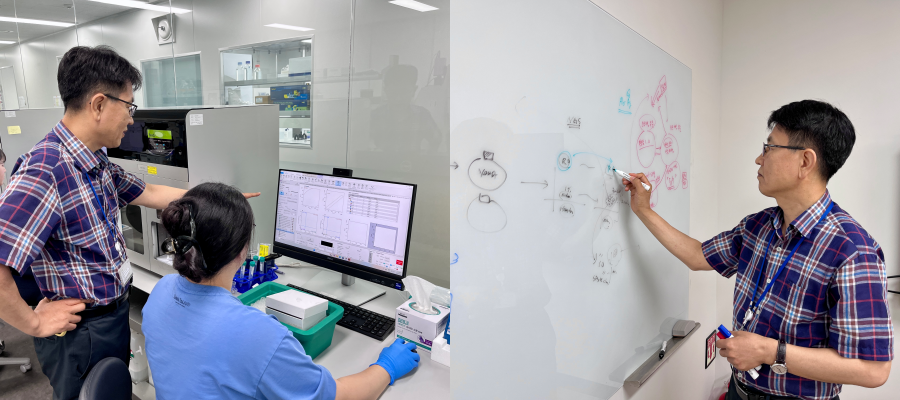
AI is opening a new era in drug discovery, but for that technology to hold true value, it must be followed by 'validation.' Galux's Drug Development Center is the gateway that ensures AI technology translates into actual medicine.
The Drug Development Center, along with Galux, is constantly experimenting and proving, turning possibilities into reality today. We look forward to welcoming those who wish to join us on this journey to change the way of new medicines are created.
[Check our open roles]
Powered by Froala Editor