


At Galux, we’re reimagining how protein therapeutics are designed.
Using GaluxDesign, our AI-driven protein design platform that integrates deep physical chemistry and generative modeling, we design therapeutic proteins from scartch, tailoring sequences and structures precisely to their targets.
Our technology has already demonstrated its breadth.
In September, we reported de novo antibody design across eight therapeutic targets, including PD-L1, HER2, EGFR(S468R mutant), ACVR2A/B, FZD7, ALK7, CD98hc, and IL-11. The study also experimentally validated GaluxDesign’s ability to design entirely novel, epitope-specific antibodies and to predict their binding structures with atomic-level accuracy. This marks a major step forward for AI in drug design. (link to the publication)
Advancing from this groundwork, our latest results show something equally important: how precision can now be achieved even with fewer designs.
1. From library-scale to small-scale preicison
In our earlier works, GaluxDesign explored the vastness of sequence space, generating up to 10⁶ antibody candidates to discover potent binders across diverse epitopes.
This large-scale effort demonstrated the platform’s capacity to search and navigate vast molecular diversity, revealing how AI can propose novel functional sequences that were previously inaccessible through conventional discovery methods.
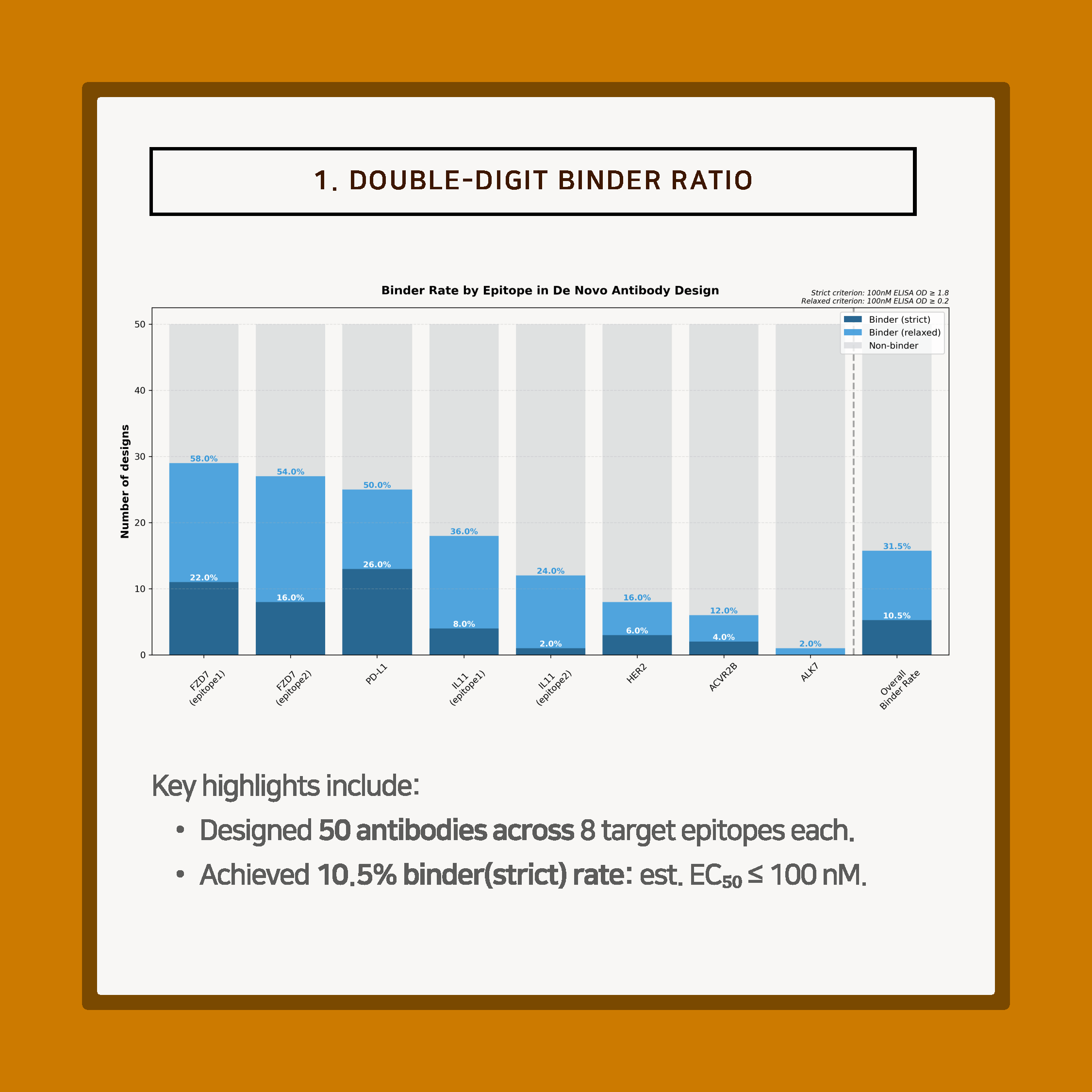
By designing only 50 antibody sequences per epitope, GaluxDesign successfully identified multiple high-affinity binders, highlighting the growing accuracy and efficiency of AI-driven design.
Across eight epitopes, our small-scale designs achieved an impressive 10.5% strict binder rate (est. EC₅₀ ≤ 100 nM). High-affinity binders were successfully identified for seven out of eight target epitopes, highlighting both the reliability and scalability of our design process.
2. Novelty and Diversity in Sequence
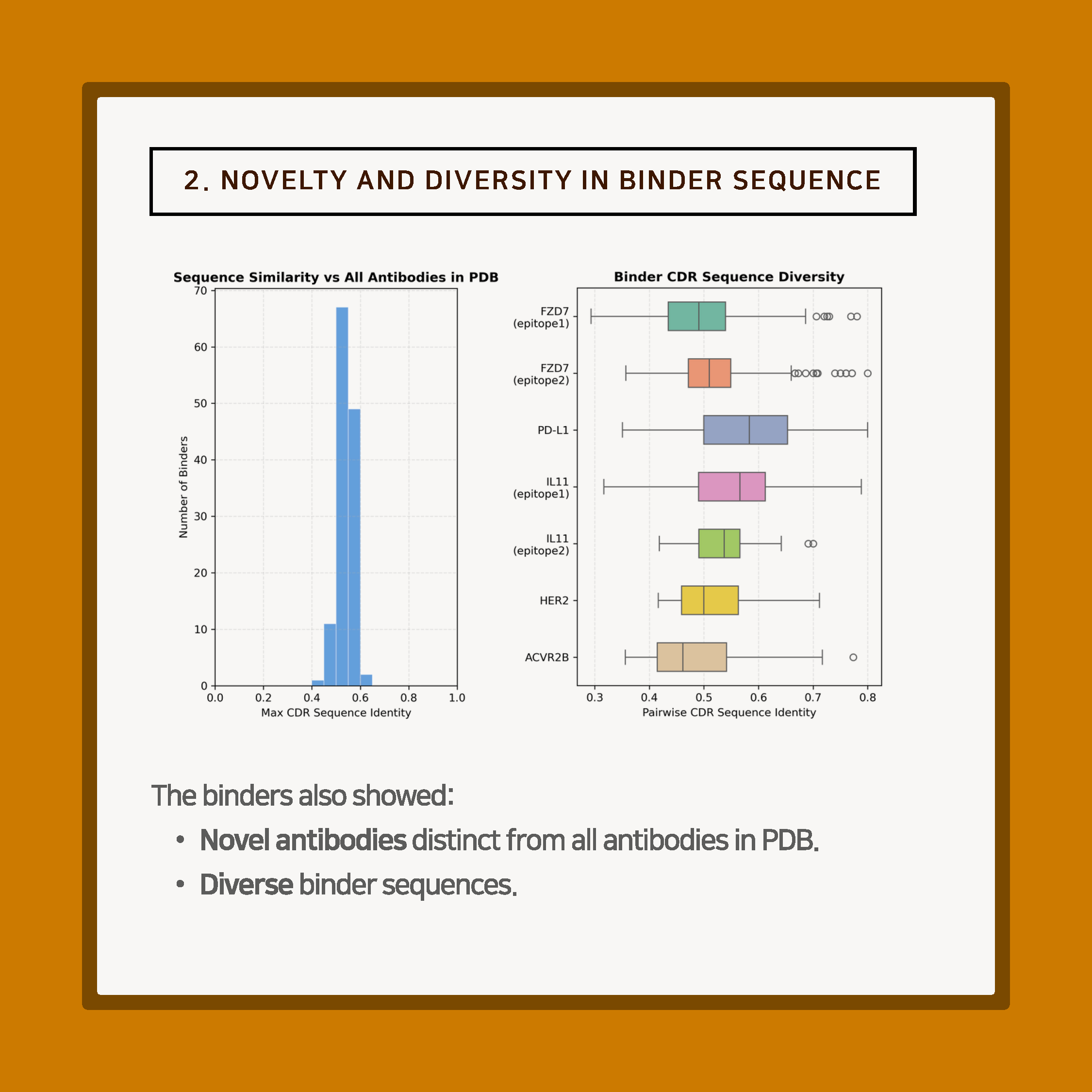
The newly discovered binders display completely novel sequences, distinct from all known antibodies in the Protein Data Bank.
They also exhibit strong sequence diversity, demonstrating that GaluxDesign doesn’t simply optimize within known sequence patterns but explores truly new regions of the design landscape.
3. Case Highlights
#1 FZD7 Binder:
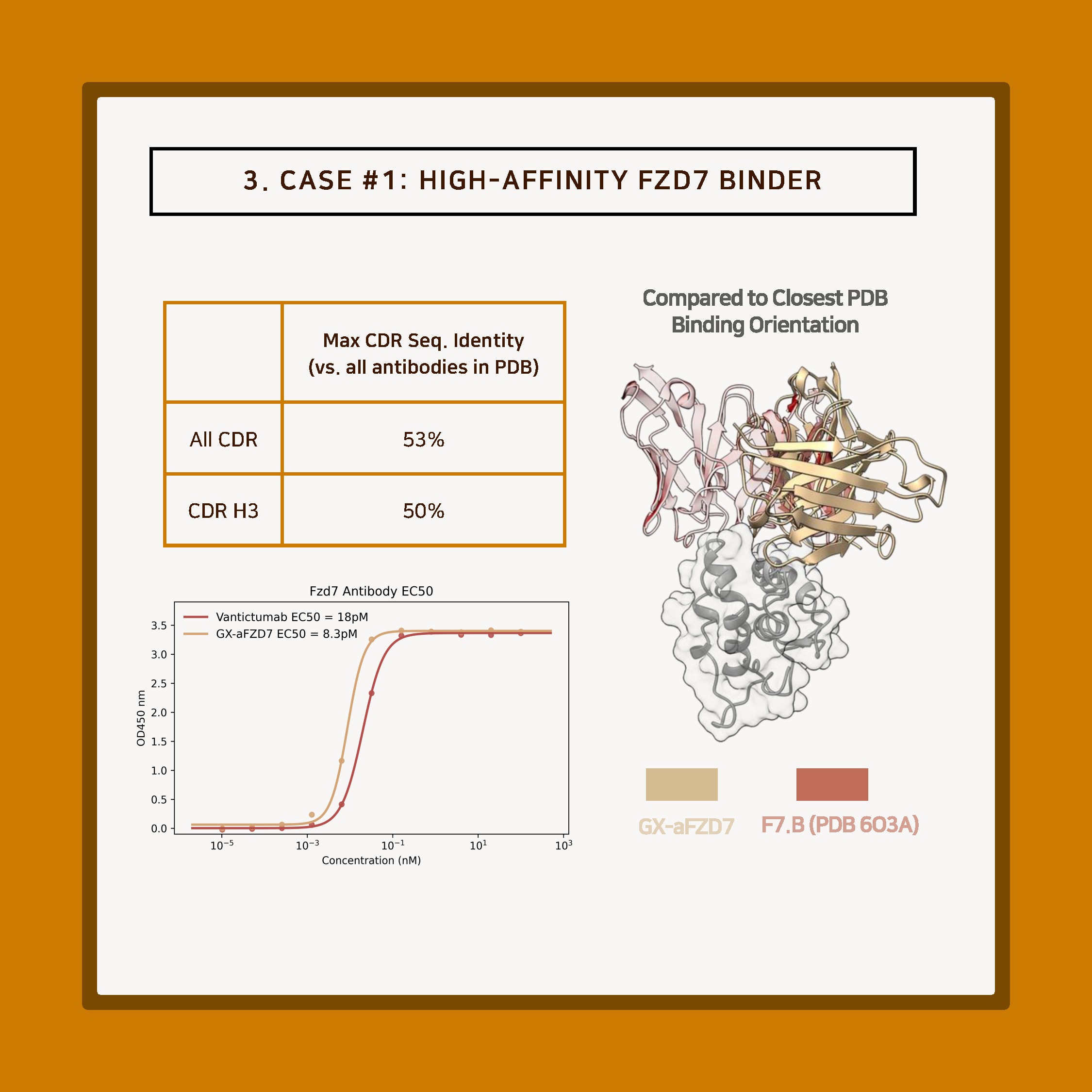
A newly designed antibody exhibited a sequence and binding orientation significantly different from Vantictumab, yet showed an even stronger binding affinity (EC₅₀ = 8.3 pM vs. 18 pM).
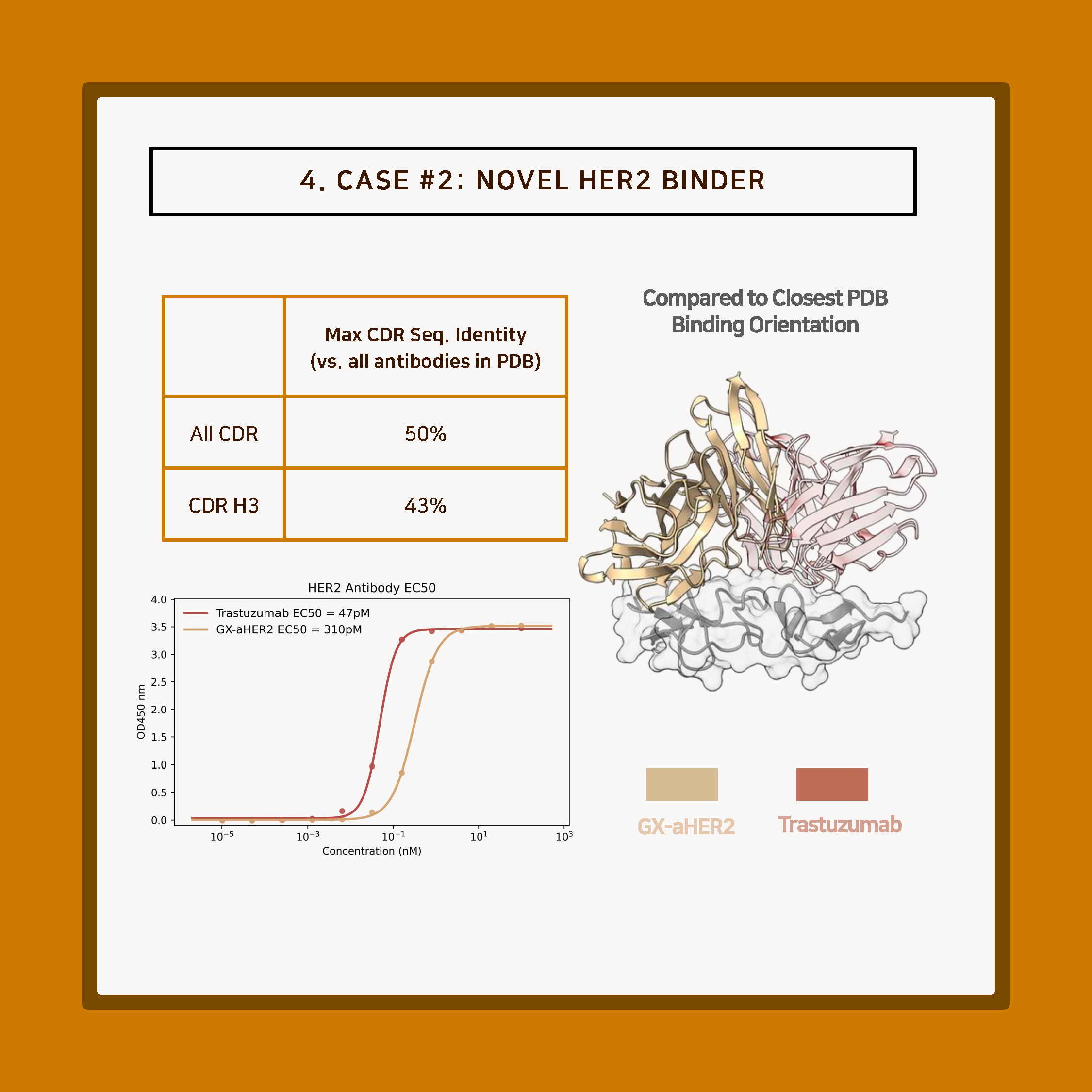
#2 HER2 Binder:
Another de novo antibody bound HER2 with high affinity (EC₅₀ = 310 pM), comparable to the commercial therapeutic Trastuzumab, while featuring a completely distinct sequence and structural conformation.
: These results reinforce the structural precision and sequence novelty of AI-driven antibody design, demonstrating that our platform can generate unique and high-affinity candidates from scratch.
4. Precision Across Scales
These latest findings mark an important inflection point.
By achieving high-affinity design with as few as 50 designs per target epitope, GaluxDesign demonstrates how AI can deliver both precision and efficiency in antibody design.
Built upon the robustness proven in large-scale design, this new step shows that meaningful antibody design can now happen across scales efficiently, predictively, and with expanding scientific reach.
As our models continue to advance, we envision a future where therapeutic design becomes faster, smarter, and capable of addressing targets once considered beyond reach.
Stay tuned, as more results and case studies are on the way soon. If you share our vision for reimagining drug discovery and development through AI, or simply want to explore what’s possible together, we’d love to hear from you.
[Contact us]
Powered by Froala Editor